


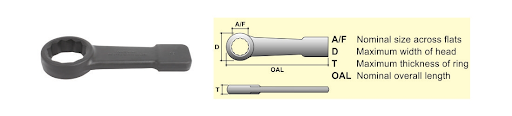
Industrial work often involves tight bolts, rusted joints, and heavy parts that need strong, controlled force to loosen or tighten. The right tool can reduce effort, speed up repairs, and help prevent damage to fasteners. Choosing between a slugging wrench and a standard wrench depends on the torque needed, the space available, and the level of force the job demands.
How a Slugging Wrench Handles Heavy Loads
A slugging wrench is built for heavy-duty tasks where a fastener needs extra force. It has a thick body and a striking end that allows a hammer to deliver an impact. This force helps loosen stuck bolts and tighten large fasteners in industrial settings.
Common uses include:
- Heavy machinery: Removing tight bolts during plant repairs.
- Steel structures: Tightening large bolts in beams and support frames.
- Pipework: Servicing flanges and joints that need high torque.
- Mining equipment: Handling fasteners exposed to dirt, wear, and heavy loads.
Its solid build makes it suitable for tough jobs where hand force alone may not be enough.
Where a Standard Wrench Works Better
A standard socket wrench uses a handle and a fitted socket to turn nuts and bolts. It gives the user better control over the applied force and works well for routine repairs, assembly, and maintenance.
Its main benefits include easy handling, access to many fastener sizes, and less need for extra tools. A standard wrench is often the better choice for small parts, light repairs, and tasks where precise tightening matters more than impact force.
However, it may not provide enough force to free seized fasteners or handle large industrial bolts without extra effort.
Key Differences for High-Torque Work
The main difference lies in how each tool applies force. A slugging wrench transfers impact force through its striking end, while a standard wrench relies on force applied through its handle.
For stuck fasteners on heavy equipment, a slugging wrench is often the better fit. For regular maintenance, smaller fasteners, and controlled tightening, a standard wrench offers greater ease of use.
Workers should also check the fastener size, tool fit, and required torque before starting. Using the wrong tool can damage bolt heads or cause injury.
Conclusion
The best tool depends on the task, not just the amount of force required. A slugging wrench suits heavy industrial work, while a standard socket wrench is useful for everyday repairs and assembly. Both have a clear role in a well-equipped maintenance toolkit.
For jobs that require impact-driven fastening, Impact Socket offers impact sockets designed to work with compatible impact tools and handle demanding fastening tasks. Choosing the correct socket size and impact rating helps improve tool fit and reduce the risk of damage.
Before starting work, inspect the tool and fastener, follow the maker’s safety guidance, and use the right tool for the required torque. This approach supports safer work and more reliable results.









Leave a Reply