


A small publisher I worked with put out a limited-run photography book a while back, the kind of project where the printing itself was gorgeous, thick stock, real attention to color accuracy, the works. They shipped the first batch in a padded envelope because it seemed like overkill to spend more on the box than made sense for a niche print run. Half the copies arrived with bent corners and a crease running down the cover. The book itself hadn’t failed at all. The envelope just wasn’t built to protect something that specific and that fragile, and there wasn’t really a way to fix a creased cover after the fact.
That’s the tension at the center of booklet packaging generally. It’s rarely the most expensive part of a project, so it’s easy to treat as an afterthought, right up until a batch of damaged shipments makes clear that function and design were never actually separate problems to begin with.
Why Booklets Get Underestimated as Packaging Problems
Paper products don’t seem like they need much protecting. They’re not fragile the way glass is, nobody worries about a booklet shattering. But they crease, they bend, corners dent from shifting around in transit, and once any of that happens there’s no undoing it. A cracked jar at least announces the damage clearly. A creased booklet cover just quietly looks worse than it should, and that’s often enough to shape how a customer feels about a purchase they were genuinely excited about a few days earlier.
This gets missed constantly because booklet packaging decisions tend to happen at the end of a project, after the actual print work is finished and budget’s already been spent on paper stock, binding, and color proofing. Packaging ends up an afterthought exactly when it should have been part of the plan from the start.
Design and Function Aren’t Actually Two Separate Jobs
It’s tempting to think about booklet packaging as two questions asked separately does it look good, and does it protect the product as if a brand has to pick a lane or compromise between the two. In practice, the better solutions handle both at once, because the same structural choices that protect a booklet also tend to be the ones that make it feel premium the moment someone picks it up.
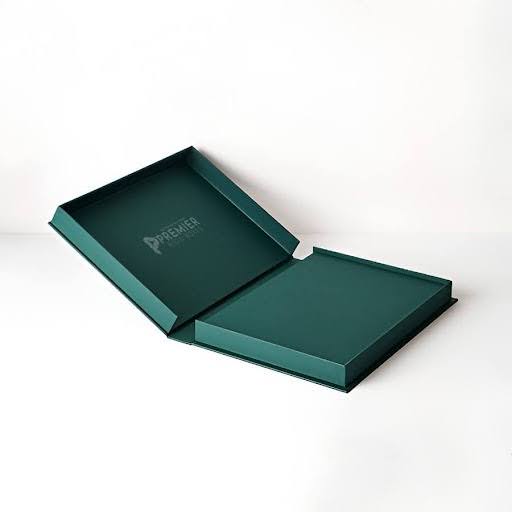
A rigid booklet box, for instance, holds its shape in a way a folding carton or padded envelope simply can’t, which protects the cover from creasing during shipping. That same rigidity also gives the box a weight and solidity in the hand that reads as considered and high-quality before anyone’s even opened it. The protective quality and the premium feel come from the exact same decision, not two competing priorities fighting for the same budget.
Fit Matters More Than People Expect
A box sized loosely around a booklet, on the assumption that “bigger is safer,” usually causes more damage than it prevents. Loose space lets the booklet slide during transit, and that movement is exactly what causes bent corners and creased covers in the first place. A box built to the booklet’s actual dimensions, with a snug fit or a simple insert holding it in place, solves most of this without needing anything elaborate.
This matters just as much for how the packaging looks as for how it protects. A booklet sitting snugly in a well-fitted box reads as intentional the second it’s opened. One rattling around in too much empty space looks like an afterthought, even if the print work inside is genuinely excellent.
Multi-Booklet Sets Need Their Own Internal Logic
Boxed sets, subscription drops, or multi-part series bring their own packaging demands beyond a single booklet. Stacked loosely, booklets tend to shift against each other, and the edge of one can crease the cover of the next during a rough shipping leg. Dividers or individual slots within the box solve this cleanly, the same way individual cavities solve equivalent problems in other product categories that ship multiple delicate items together.
This is also where rigid construction earns its cost more clearly than it does for a single booklet. A divided tray holds its shape far better in dense, rigid material than it would in something thinner, and it handles the combined weight of several booklets without sagging over the length of a shipping route.
Presentation Signals Value Before the First Page Gets Opened
For anything positioned as a collectible, a limited edition, or a premium print product, packaging does real work before a customer’s even flipped to page one. A rigid booklet with lid with a considered interior fit tells someone, in the first few seconds of unboxing, that what’s inside was worth packaging carefully. That signal matters a lot for justifying a higher price point on something that’s ultimately just paper and ink, however beautifully executed.
Final Thought
The mistake to avoid is treating booklet packaging as a late-stage decision separate from the actual print project, chosen mainly on cost rather than fit for the product. Custom booklet boxes, sized to the booklet’s real dimensions and built with the same care as the printing inside it, tends to protect the product and elevate how it feels in someone’s hands using the exact same design choices. Design and function were never really competing goals here. They’re the same problem, solved once, done right the first time.















Leave a Reply