


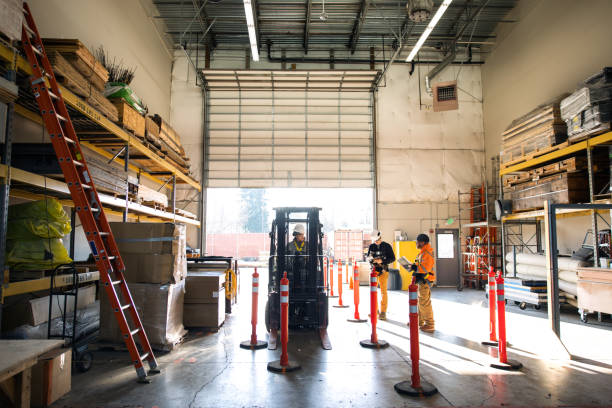
Most people who sign up for forklift training expect to pass a test. What catches them off guard is how different the machine feels when there is an actual load in front and real equipment on all sides.
That gap between knowing the rules and handling the equipment is exactly what practical evaluation is built to address. It shows whether an operator is ready for the floor, not just for the exam.
When forklift training in Canada includes a solid hands-on evaluation, workers are better prepared and employers have far fewer surprises once someone is on the job.
What Canadian Workplace Safety Law Actually Requires From Forklift Operators
The laws across Canada do not just check whether someone sat through a forklift training course. It asks whether they are competent. That is a meaningful difference.
- Ontario’s OHSA requires operators to be trained and evaluated before working independently on equipment
- Alberta’s OHS Act places responsibility on employers to confirm a worker can safely handle the machinery assigned to them
- BC’s WorkSafeBC standards requires documented proof of both training and hands-on ability
- “Competency” under these laws means demonstrated physical ability, not just a quiz result
This is why forklift operator certification in Canada carries real weight only when practical evaluation is part of the process. The certificate should reflect what a worker can actually do, not just what they studied.
The Difference Between Knowing and Doing (And Why It Matters on the Floor)
Memorising forklift safety rules is one thing. Operating a loaded machine in a real workspace is another. The two are not the same, and plenty of incidents on Canadian job sites prove that.
- A worker can pass a written test without ever learning to judge load centre on an actual lift
- Learning about blind spots is very different from checking them under time pressure on a busy dock
- Knowing the rules for narrow aisle travel alone does not prepare someone for navigating real racking systems
When forklift operator certification in Canada skips the hands-on part, employers are essentially hiring on faith. That is a gamble most workplaces cannot afford. Practical evaluation removes the guesswork and worries related to it. It confirms that the person holding the certificate has actually proven they can handle the equipment, not just read about it.
What a Practical Forklift Evaluation Actually Tests
A practical evaluation is not a formality added on at the end of a course. It is structured, specific, and designed to reflect what operators actually face on a job site. Here is what gets assessed.
Pre-Operation Inspection
Before the employment, an evaluator watches how the candidate approaches the machine. Fluid levels, fork condition, mast function, tire wear, and safety devices all get checked. This matters because a worker who skips the inspection on day one is a real risk by day two. Good forklift training in Canada covers this step in detail for that very reason.
Hands-On Manoeuvring and Load Handling
This is the core of any credible certification. Candidates are assessed on forward and reverse travel, sharp turns, stacking, de-stacking, and working within marked aisles. Evaluators are not just watching for smooth driving. They are watching for awareness of what is happening around the machine at all times.
Response to Simulated Workplace Conditions
A solid evaluation goes beyond basic controls. It puts the operator in situations that reflect real site conditions, such as uneven loads, low-clearance areas, and simulated pedestrian traffic. This is the part that separates someone who completed a course from someone who is genuinely ready for the floor.
Three Forklift Training Courses That Include Rigorous Practical Evaluation
Choosing the right course matters. The ones worth your time are built around real evaluation, not just classroom hours. Here are three programmes that treat practical assessment as a core requirement.
Counterbalance Forklift Operator Certification
This is the most sought-after forklift operator certification in Canada. It focuses on the standard sit-down counterbalance truck found in warehouses, distribution centres, and loading docks. Training covers both theory and hands-on evaluation, and most Canadian employers hiring for forklift roles expect to see this certification on a resume.
Reach Truck and Narrow Aisle Forklift Training
Reach trucks work in high-bay racking environments where precision is everything. Our reach truck training is built around exactly that. Practical evaluation in this course carries extra weight because errors in a narrow aisle can cause serious damage to racking systems and the people working around them.
Telehandler and Rough Terrain Forklift Training
Construction sites, lumber yards, and outdoor operations rely on telehandlers. This course covers boom extension, uneven terrain, and dynamic load conditions that can only be properly tested through hands-on practice. Demand for this certification continues to grow across Canadian construction and resource sectors.
How to Know If a Forklift Training Provider in Canada Is Worth Your Time
Not every provider delivers genuine forklift operator certification in Canada. Watch for these:
- Practical evaluation should be included, not as an option
- Trainers should hold recognised certifications
- The programme should match with your province’s OHS standards
A Certificate Means More When the Work Behind It Is Real
Practical evaluation is what separates forklift training that looks good on paper from training that actually prepares someone for the job. It is the part that confirms a worker is ready, not just certified. That distinction matters on every job site, every single day.
When the training is thorough and the evaluation is real, everyone benefits. Workers feel more confident, employers take on less risk, and the workplace becomes safer for the people in it.














Leave a Reply