


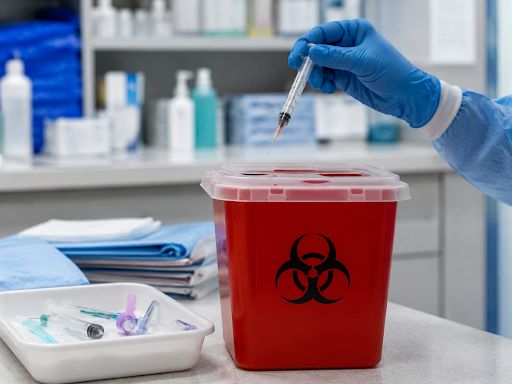
Healthcare facilities generate many different types of waste, ranging from ordinary office materials to items that require specialized handling. Needles, syringes, scalpels, contaminated materials, and certain laboratory wastes can present physical and biological hazards when they are not properly contained and handled. Effective healthcare waste management is therefore an important part of maintaining workplace safety, protecting waste handlers, and supporting responsible environmental practices.
The U.S. Environmental Protection Agency (EPA) explains that medical waste is generated in settings such as hospitals, physicians’ offices, dental practices, laboratories, veterinary facilities, and research institutions. Medical waste can include materials contaminated with blood, body fluids, or other potentially infectious materials. However, the exact definition and regulatory requirements can vary by state because medical waste is primarily regulated at the state and local levels in the United States.
What Is Healthcare Waste Management?
Healthcare waste management refers to the organized process of identifying, separating, containing, handling, storing, transporting, treating, and disposing of waste generated by healthcare activities.
Not every item discarded by a healthcare facility requires the same level of control. The Centers for Disease Control and Prevention (CDC) identifies several categories requiring special handling precautions, including microbiology laboratory waste, bulk blood and blood products, pathology and anatomical waste, and sharps such as needles and scalpels.
Proper classification is important because different waste streams can have different handling and treatment requirements. Facilities should follow applicable federal, state, and local regulations when determining which materials are regulated and how they should be managed.
Why Proper Sharps Management Matters
Sharps are among the most important waste categories to control because they can cause puncture wounds even after they have been discarded. Used needles and other contaminated sharps can expose workers to potential injuries and infectious materials.
The CDC notes that sharps can pose a significant injury risk and recommends placing disposable needles, syringes, scalpels, and other sharp items in puncture-resistant containers located as close as practical to the point of use. Used needles should not be bent, recapped, or broken by hand before disposal.
The EPA similarly warns that improperly discarded needles can injure waste workers and others who encounter them during collection, transportation, or processing.
How Sharps Containers Should Be Used
A sharps container is designed to provide a secure barrier between used sharp objects and people who handle waste. For healthcare workplaces, OSHA requirements specify that containers for contaminated sharps must be closable, puncture-resistant, and leak-proof on the sides and bottom. They must also be appropriately labeled or color-coded.
Containers should be positioned close to where sharps are used so that employees do not need to carry exposed needles or other sharp objects across a room. They should also be replaced before becoming overfilled. OSHA specifically requires facilities not to allow sharps containers to become overfilled.
An effective healthcare waste management program should therefore include clear procedures for selecting, positioning, inspecting, replacing, and transporting sharps containers.
Common Mistakes in Sharps Disposal
Several practices can increase the risk of injuries. One common mistake is placing needles or other sharps into ordinary trash. Another is attempting to recap, bend, or break a contaminated needle before disposal.
Overfilled containers can create another hazard because objects may protrude from the opening or become difficult to contain safely. OSHA requires contaminated sharps containers to be closed before removal or replacement and calls for secondary containment when leakage is possible.
Employees should also receive appropriate training. CDC recommendations call for personnel involved in handling and disposing of potentially infectious waste to understand the relevant hazards and proper handling procedures.
Storage and Internal Transportation
Waste management does not end when a sharp is placed into a container. Facilities need procedures for moving and storing regulated waste before treatment or final disposal.
CDC guidance recommends storing regulated medical waste in appropriate containers and in areas that are properly ventilated and protected from pests. When waste must be transported for treatment, closed and impervious containers should be used.
Facilities should establish designated routes and procedures for moving waste internally. These procedures can reduce unnecessary handling and help keep waste away from patient-care and public areas.
Developing an Effective Waste Management Plan
A comprehensive healthcare waste management program should clearly define responsibilities and procedures. The CDC recommends developing a plan covering the collection, handling, predisposal treatment, and final disposal of regulated medical waste. It also recommends designating individuals responsible for establishing, monitoring, reviewing, and administering the plan.
A practical plan can address:
- Waste classification and segregation
- Sharps container placement
- Employee training
- Container inspection and replacement
- Internal waste transportation
- Temporary storage
- Treatment requirements
- Final disposal
- Documentation and compliance reviews
- Procedures for spills and accidental exposures
Regular training is particularly important because safe procedures depend on consistent employee behavior.
Treatment and Final Disposal
Regulated medical waste may require treatment before final disposal. The appropriate method depends on the type of waste and applicable regulations. The CDC identifies treatment approaches that can include autoclaving, incineration, chemical disinfection, and other approved technologies, while state regulations determine which methods are appropriate for particular categories.
This is why facilities should not assume that one disposal method applies to every type of healthcare waste. Waste classification and local regulatory requirements should guide the process.
The Role of Professional Waste Services
Healthcare facilities that generate regulated waste need reliable procedures for moving waste from the point of generation through treatment and final disposal. Depending on the facility and applicable regulations, this may involve qualified waste management providers.
Before arranging a service, facilities should understand which waste streams they generate, how frequently containers become full, applicable state requirements, and what documentation is needed. These factors can help create a waste management process that is consistent and easier to monitor.
Conclusion
Effective healthcare waste management is a combination of correct waste segregation, secure containment, employee training, appropriate storage, regulated transportation, treatment, and final disposal. Sharps deserve particular attention because discarded needles, scalpels, and similar objects can cause injuries when they are placed in ordinary waste or handled incorrectly. Healthcare facilities can reduce preventable risks by keeping appropriate sharps containers close to points of use, avoiding recapping or bending contaminated needles, replacing containers before they become overfilled, and training employees in established procedures. For facilities seeking dependable sharps pickup, understanding these requirements is an important part of maintaining a safe and compliant waste disposal process. A well-structured waste program should also account for applicable state and local regulations because medical waste requirements can differ across jurisdictions.













Leave a Reply