


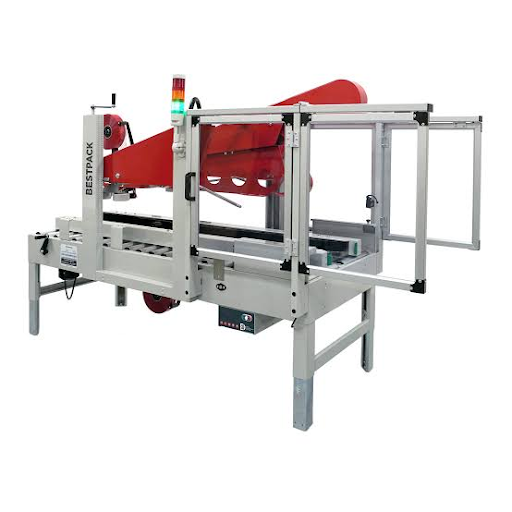
Modern packaging operations depend on equipment that can close cartons consistently, maintain production speed, and accommodate the demands of different industries. Carton sealing machines are particularly important because improperly sealed boxes can create handling, storage, and transportation problems. Understanding how Bestpack packaging systems are designed, what types of equipment they include, and which components require regular attention can help businesses make better decisions about packaging automation and maintenance.
What Are Packaging Systems?
Packaging systems are combinations of equipment used to prepare products for storage, distribution, and shipment. Depending on the application, a packaging line may include carton erectors, case sealers, conveyors, tape heads, wrapping equipment, sensors, and control systems.
Carton sealing is one of the most common automated packaging processes. A case sealer applies adhesive tape to close carton flaps and create a consistent seal. Systems can be designed for uniform cartons, varying carton sizes, or specialized packaging applications.
The appropriate configuration depends on product dimensions, carton construction, production volume, available floor space, and the required level of automation.
What Is a Carton Sealing Machine?
A carton sealing machine automatically applies tape to the seams of a cardboard box. Depending on the machine design, cartons may be fed manually or automatically, and sealing may occur on the top, bottom, or both surfaces.
Equipment specifications vary considerably. Some systems are intended for smaller production environments, while high-speed machines can process substantially larger carton volumes.
Current industry documentation describes systems ranging from operator-fed machines to automated carton sealing solutions, including equipment designed for random carton sizes and specialized applications.
What Types of Carton Sealers Are Available?
Several carton-sealing configurations are commonly used in packaging operations.
Uniform Carton Sealers
These machines are designed for operations where cartons have similar dimensions. Operators typically adjust the machine to the required carton size before production begins.
Uniform case sealers can be suitable for manufacturers that process a limited range of standardized box sizes.
Random Carton Sealers
Random case sealers can accommodate cartons with different dimensions without requiring the operator to make manual adjustments for every box. Sensors and adjustable mechanisms allow the machine to respond to changing carton sizes.
This configuration can be particularly useful in fulfillment environments where many products are shipped using different carton dimensions.
Top and Bottom Sealers
Top-and-bottom systems apply tape to both major carton seams. Sealing both surfaces can provide consistent closure while reducing repetitive manual work.
Specialized Sealers
Some packaging applications require equipment designed for unusual carton shapes, wet environments, food processing, agriculture, or other specialized conditions. Stainless-steel configurations, for example, may be selected where wash-down or moisture resistance is important.
Why Is Automation Important?
Automation can improve consistency by controlling repetitive packaging movements according to predetermined settings.
In manual carton sealing, operators must repeatedly fold flaps, position tape, cut the tape, and handle completed cartons. Automated equipment can perform some or all of these steps continuously.
The potential benefits include:
- More consistent carton closure
- Reduced repetitive manual work
- More predictable throughput
- Improved packaging-line integration
- Reduced variation between packages
- Easier monitoring of production
Automation does not eliminate the need for operators and maintenance personnel. Machines still require setup, inspection, cleaning, adjustment, and periodic replacement of worn components.
What Factors Should Be Considered Before Choosing Equipment?
Selecting packaging equipment requires more than comparing advertised production speeds.
Businesses should evaluate:
- Carton dimensions
- Carton weight
- Carton material
- Required throughput
- Tape width and type
- Available floor space
- Operator requirements
- Electrical specifications
- Environmental conditions
- Maintenance requirements
Production speed should also be considered realistically. Published throughput can depend on carton dimensions, machine configuration, operator feeding, and other operating conditions. Equipment documentation commonly notes that actual speed can vary according to carton size and available machine options.
Why Are Tape Heads Important?
The tape head is responsible for applying and cutting the adhesive tape used to close the carton. It is therefore one of the most important assemblies on a case-sealing machine.
A tape head can contain rollers, cutting mechanisms, tape guides, springs, bearings, and other components. Wear in any of these components can affect sealing consistency.
Common symptoms of tape-head problems include:
- Tape not cutting correctly
- Uneven tape application
- Loose tape
- Wrinkled tape
- Excessive tape tension
- Tape tracking problems
Routine inspection can help identify wear before it results in repeated carton-sealing defects.
Which Components Experience the Most Wear?
Packaging equipment contains numerous moving components, and service life depends on operating conditions.
Frequently inspected components can include:
- Conveyor belts
- Rollers
- Bearings
- Tape heads
- Blades
- Springs
- Bushings
- Motors
- Switches
- Sensors
- Fasteners
A parts catalog for packaging equipment can contain individual components such as rollers, belts, switches, screws, guards, and other replacement items.
The exact replacement interval depends on production volume, environmental conditions, maintenance practices, and component design.
How Does Preventive Maintenance Help?
Preventive maintenance focuses on identifying potential problems before they interrupt production.
A practical maintenance schedule can include cleaning equipment, checking conveyor belts, inspecting tape heads, examining fasteners, testing sensors, and monitoring unusual noise or vibration.
Maintenance personnel should also check whether cartons are entering the machine correctly. Poor carton alignment can place additional stress on belts and sealing mechanisms.
Keeping accurate records makes maintenance more effective. Records can show which components fail repeatedly and whether a particular machine requires more frequent inspection.
Why Are Replacement Components Important?
Even well-maintained equipment eventually requires replacement components. A damaged belt, worn roller, broken spring, or faulty switch can prevent an otherwise functional machine from operating correctly.
Keeping critical machines parts available can reduce repair delays, particularly for components with longer procurement times.
However, replacement components should always be matched to the exact machine configuration. Similar-looking parts may have different dimensions, materials, or mounting arrangements.
Part numbers, equipment manuals, diagrams, and serial-number information can help maintenance teams identify the correct component.
How Can Packaging Lines Reduce Downtime?
Reducing downtime requires both preventive maintenance and good inventory planning.
Packaging facilities can improve reliability by:
- Scheduling regular inspections
- Monitoring component wear
- Maintaining critical spare parts
- Training machine operators
- Keeping manuals accessible
- Recording equipment failures
- Checking machine alignment
- Replacing worn components before failure
- Reviewing recurring maintenance issues
A recurring component failure should be investigated rather than repeatedly corrected without identifying the underlying cause. Problems such as incorrect adjustment, excessive loading, contamination, or alignment issues can shorten component life.
What Role Does Operator Training Play?
Operators are often the first people to notice changes in equipment performance. Training them to recognize unusual sounds, inconsistent tape application, carton jams, or changes in machine movement can help maintenance teams respond earlier.
Operators should also understand basic safety procedures and know which adjustments they are authorized to perform.
Complex electrical or mechanical repairs should be left to qualified maintenance personnel.
What Safety Practices Are Essential?
Carton-sealing equipment contains moving belts, rotating components, cutting mechanisms, electrical systems, and other potential hazards.
Before maintenance begins, the equipment should be shut down and appropriate energy-isolation procedures followed. Lockout/tagout may be necessary when workers could be exposed to hazardous energy.
Guards and safety devices should remain properly installed, and operators should follow the equipment’s specific safety instructions.
Conclusion
Bestpack packaging systems illustrate the range of carton-sealing technologies available for modern packaging operations, from uniform carton sealers to random-size and specialized equipment. Choosing the right configuration requires consideration of carton dimensions, production volume, environmental conditions, tape requirements, and maintenance needs. Maintaining essential machines parts and accurate equipment records can help reduce unnecessary downtime and support consistent packaging performance over the long term. Reliable performance also depends on routine inspections, operator training, correct adjustments, and timely replacement of worn components.











Leave a Reply