


A discarded laptop can look harmless beside an office bin, yet its circuit boards, batteries, and screens contain materials that need careful handling. When devices are mixed with ordinary rubbish, reusable resources can be lost, and harmful substances may enter the environment.
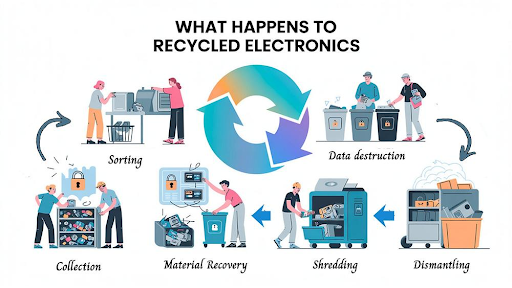
For businesses and households, electronic waste disposal companies provide a route from collection to responsible processing. Understanding each stage makes it easier to prepare equipment, protect information, and ensure that electronic items move towards reuse or material recovery instead of uncontrolled dumping.
Responsible Collection Begins The Electronic Waste Journey
The lifecycle starts before equipment reaches a recycling facility. Clear preparation, identification, and collection arrangements help keep devices accounted for and reduce avoidable handling risks.
1. Identify Equipment Ready For Retirement
Old computers, printers, phones, servers, monitors, and networking devices can accumulate as technology is upgraded. Separating them from general waste is the first practical step.
- Create an asset list: Record device types and approximate quantities.
- Separate electronics: Keep equipment in a designated, secure area.
A basic inventory helps determine collection needs and prevents useful items from ending up in mixed waste.
2. Prepare Devices For Safe Collection
Store electronic equipment carefully while awaiting pickup. Broken screens, loose batteries, and tangled cables may require separate handling to reduce damage or exposure.
- Keep items protected: Use stable, dry storage and avoid stacking fragile devices carelessly.
- Flag special items: Identify damaged batteries or unusual equipment.
Preparation makes loading more orderly and helps collection teams understand what they are handling.
3. Arrange Collection Around Operational Needs
Businesses may retire equipment in stages during office moves, technology upgrades, or data centre changes. A planned pickup can reduce disruption and keep storage areas clear.
- Coordinate access: Confirm collection dates, loading points, and site contacts.
- Estimate volume: Share the expected number and type of devices.
A coordinated collection supports traceability from the premises to the next stage of processing.
4. Maintain Records During Handover
The transfer stage should establish what has left the site and who has received it. This is especially important when organisations manage large quantities of equipment.
- Document the handover: Retain collection details and item records.
- Confirm responsibility: Clarify the agreed scope for handling and processing.
Good records create a clear starting point for audits and internal sustainability reporting.
Sorting And Data Protection Guide: Electronic Waste Disposal Companies
Once collected, equipment must be assessed before deciding its next destination. Electronic waste disposal companies may separate reusable assets, recyclable materials, and items requiring secure destruction.
1. Assess Reuse And Refurbishment Potential
Not every retired device is beyond use. Some computers, monitors, or components may remain functional or become suitable for refurbishment after appropriate testing.
- Check condition: Consider functionality, age, and repair requirements.
- Separate reusable items: Keep them apart from damaged equipment.
Extending the useful life of suitable devices can reduce demand for newly manufactured products.
2. Protect Information Stored On Devices
Laptops, servers, phones, and storage media can retain confidential business or personal information after they are switched off. Deleting visible files alone may not provide sufficient protection.
- Identify data-bearing assets: Record devices containing hard drives or other storage.
- Select secure treatment: Use suitable data wiping or physical destruction.
A documented method helps organisations manage information risks before equipment is reused or dismantled.
3. Categorise Equipment By Material And Risk
Different devices contain different combinations of metals, plastics, glass, circuit boards, and batteries. Sorting helps ensure that each material stream receives suitable treatment.
- Group similar items: Separate screens, cables, batteries, and IT equipment.
- Isolate damaged components: Follow appropriate handling procedures for hazardous or fragile parts.
Correct categorisation improves processing efficiency and reduces the chance of unsuitable materials entering the wrong stream.
4. Track Processing And Certification
Businesses may need evidence that retired assets were handled according to the agreed process. Records can support internal controls and demonstrate responsible waste management.
- Keep processing details: Record quantities and relevant asset information.
- Request certificates: Retain applicable recycling or destruction documentation.
Traceable records connect collection activity with the final treatment of equipment.
Material Recovery Turns Discarded Electronics Into Resources
After sorting and any required data treatment, equipment can move towards dismantling and recovery. The aim is to separate useful materials while responsibly managing non-recyclable or hazardous fractions.
1. Dismantle Equipment Into Separate Components
Technicians may take apart devices to separate circuit boards, cables, casings, screens, and other components. Careful dismantling makes later material recovery more effective.
- Separate components: Keep distinct material types in suitable streams.
- Handle fragile parts carefully: Reduce breakage and unnecessary contamination.
This stage prepares complex products for more specialised processing.
2. Recover Metals And Reusable Materials
Electronic products can contain copper, aluminium, steel, and other valuable materials. Recovering these resources can reduce reliance on virgin raw materials and support circular production.
- Sort metal fractions: Separate recoverable metals from mixed residues.
- Route materials onward: Send sorted streams to appropriate recovery facilities.
Recovered materials may become inputs for manufacturing new products.
3. Manage Batteries And Hazardous Fractions Carefully
Some electronic components require specialised treatment because of their chemical composition or physical condition. Batteries and certain display components should not be handled as ordinary mixed waste.
- Keep streams separate: Avoid mixing batteries with general electronic scrap.
- Use suitable handlers: Follow appropriate safety and environmental requirements.
Responsible handling helps reduce risks to workers and the surrounding environment.
4. Direct Residual Waste To Appropriate Treatment
Not every part of an electronic device can be reused or recycled. Remaining fractions need suitable treatment rather than being abandoned or sent into informal disposal channels.
- Identify residuals: Distinguish recoverable material from non-recoverable waste.
- Confirm the destination: Use appropriate authorised processing routes.
A complete lifecycle accounts for residual material as carefully as recovered resources.
Conclusion: Choosing Electronic Waste Disposal Companies
A device’s journey should not end when it leaves a desk or storage room. Proper collection, secure data handling, careful sorting, and material recovery turn disposal into a managed process that protects information and conserves resources. Businesses can support this cycle by keeping records, separating equipment, and planning retirement before obsolete electronics accumulate.
For organisations seeking electronic waste disposal companies in Dubai, Planet Green Recycling provides e-waste collection, sorting, secure data destruction, material separation, recycling, and certification. They handle equipment such as computers, laptops, servers, monitors, printers, networking devices, and other electronics. Their services also include IT asset disposal and data centre decommissioning, supporting businesses through different stages of equipment retirement. By choosing a documented recycling process, organisations can manage unwanted technology responsibly and contribute to a more resource-conscious future.









Leave a Reply