


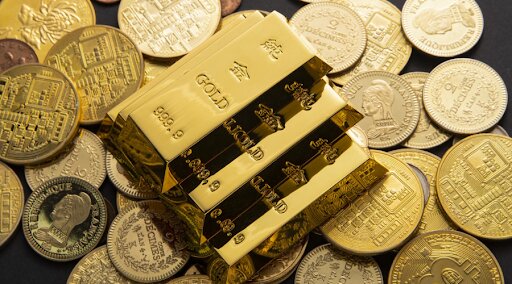
Gold is considered to be more than an inflation hedge and a store of value; it is also a safe-haven asset. However, not a single one of these terms may explain why gold prices may skyrocket or drop sharply over a few days. The precious metal is one of the most fascinating assets in the financial world, which is influenced by market forces, monetary policies, investors’ expectations, and physical supply-demand fundamentals.
The Gold Price Trend should be analyzed not only from the perspective of the most recent price change but also from the context of its development. Changes in interest rates, inflation, movements in currencies, purchases on the part of central banks, geopolitics, and the positioning of investors can all influence the change in interest. Sometimes they work cumulatively; other times they contradict each other.
Gold is both a commodity and a financial asset.
Gold’s unique role in the global economy is a result of its multiple functions.
Gold is not only a physical commodity that is physically put into jewelry or other materials and then used in the technology industry. It is also viewed as a store-of-value for both central banks holding large amounts in reserve and for individuals and institutions that see it as an investment in times when other opportunities seem risky.
Gold, however, pays no dividends like shares and no interest like bonds, which means it relies on people’s inclination to buy it relative to other forms of investment. Consequently, it stands slightly apart from other commodities like oil, whose behavior is much more correlated to usage in consumption and industrial activity. The market value of gold is often driven much more by financial attitudes. That difference seems to be the key to grasping the nature of the gold market.
Interest rates change the opportunity cost.
Interest rates are also arguably amongst the most commonly tracked influences on gold.
Gold does not pay an interest payment. Should rates and bond yields rise, then investors are able to make a higher profit through holding interest-yielding investments. Then, the opportunity cost of holding gold is greater. Conversely, should yields fall, ll the relative disadvantage diminishes.
Not always do we see price decline should rates increase or prices rise as bond rates fall. The markets do not function on simple patterns of this nature, and it is often the direction of real yield, equally importantly, the expected future direction of bond yields which is relevant.
Suppose, for example, that an increase in bond yields does not necessarily mean gold declines immediately if investors believe a central bank will lower interest rates at some stage in the next few months-bond yields may begin to decrease before this and investors rebalance their portfolio.
Economic releases thus have a critical impact on the movement of prices, not even directly in relation to gold but to the prospect of where interest rates will take precedence. Employment data, figures on inflation, and any central bank speeches can affect sentiment over such future movement.
Real yields provide a more useful signal.
Considering just the nominal rate of interest can be deceptive. The rate of inflation will diminish the purchasing power of your money. The real rate attempts to capture this difference.
The argument is that if investors receive quite high positive real yields on a risky asset, then an income-unrewarding asset like gold does not hold much appeal.
Falling real yields have the opposite effect and help to drive down the opportunity costs for gold holdings. This idea, more than most, seems to explain events surrounding shifts in policy stances. If you witness persistently high inflation along with steadily low interest rates, the real yield may even turn negative on bonds. A worsening of real bond returns will therefore favor non-yield-bearing securities such as gold.
But it makes no sense if central bankers get out of control; with central banks moving to combat inflation and taking action that raises rates, real yields could become substantially positive even with high inflation. The dollar has a direct and indirect influence.
International trade of gold takes place in U.S. dollars, thus making the currency’s role in gold’s price inevitable.
When the dollar rises, the price for non-dollar-denominated buyers becomes higher and thus can create a negative impact on buying power from outside the US, hence creating some pressure.
The lower the dollar rises, the higher the price gets for buying of gold-all the opposite when there is a weakening dollar.
But what seems to be occurring is also dependent not so much on their values, but on expectations of the dollar, which represents expectations of U.S. interest rates, monetary policy and interest rates and global money flows. Higher rates in the U.S. can thus both be a stronger dollar affecting gold price both by the exchange rate channel and by the yield channel.
What is causing the dollar to move, and what does that tell us about the wider economic environment?
Inflation can support gold, but not automatically.
It has also long held that “gold is a good store of value inflation hedge.” The argument seems logical enough. If you can buy fewer things with a dollar as inflation rises, then surely investors should just gravitate towards something that will maintain its value longer.
In fact, gold prices do not move automatically with inflation or vice versa.
Rising inflation may lead to more interest in buying gold, but if it triggers central bankers into aggressive interest rate rises, the rising real yield may take some demand out of the price. Expectation matters far more. Markets focus on whether inflation is seen as transitory or entrenched, what policy responses officials might adopt, and what investors’ views are on the likely success of those policies. That is the reason why a higher inflation number than expected might sometimes drive up the price of gold and at other times might lead to no gain for gold prices depending on the overall environment.
Geopolitical risk can create sudden demand.
When there are concerns about global stability, investors often flock to gold. Geopolitical issues, the threats of warfare, sanctions, and concerns surrounding the financial systems mean that traders and investors like to put their money into asset classes that do not suffer the woes of a single company’s profit warning or a government’s financial issues. As gold has no corporate issuer tgo bankruptcy or no loans that have to be repaid, in uncertain times the yellow commodity has traditionally been thought of as a safe place for money.
Yet geopolitical risk does not always result in a protracted rally: a discrete event often triggers an immediate buying frenzy and price spike which can subsequently fall away as the wider economic implications are understood and evaluated.
If events do disrupt the flow of oil, international trade, or general economic and financial stability over an extended period, however, its effect on gold will likely be more prolonged, and it is this that matters.
Central banks provide an important source of demand
Central banks play an important role in the gold market since they hold gold as part of their official reserves and also because their actions are often long-term rather than short-term trading. Gold can provide a diversification avenue and diminish dependencies on individual countries’ or entities’ assets.
Central banks added a record 863t to their reserves last year, and this demand was sustained in the first part of 2026: Q2 central banks added 289t while they only sold 3.7t in the three preceding months (Source: World Gold Council). Their latest survey shows that an overwhelming proportion of reserve managers anticipate an increase in global official gold holdings over the coming year.
These flows cannot be seen as a guarantee of future price gains, as central banks’ demand can fluctuate greatly depending on the period, but solid investment demand on a structural level, such as from central banks, has an impact on market fundamentals and investor expectations.
Investment demand can move much faster.
While demand for physical gold may have a tendency to vary slowly, the investment flow may react to news more quickly, due to its derivative nature. Physical buying of gold could happen in the form of physical bars and coins (e.g., South African Krugerrands, Maple Leaves).
Investment can also take the form of readily investable, traded funds, such as gold-backed exchange-traded funds, etc.
Such derivative contracts allow investors to quickly adjust their positions when expectations for future economics change. Monitoring the buying/selling activity on such gold-backed exchange-traded funds may give us a preview of the real investment demand’s willingness to flow into gold, which, actually, the World Gold Council has reported as 801 tons for 2005. Investment flow in the gold market may magnify any change. Once the price starts moving up and the existing price movement appears to support the economic vision in investors’ minds, additional demand continues to drive the price higher, and it may then attract trend-following investors.
If gold starts declining, the same may happen in reverse, as investors’ anxieties may increase further about the prospect of interest rates, currencies, es and the economy, with selling, hence strengthening the downside momentum.
This might explain why, even in the short run, gold could present a huge movement, whereas mine production and consumption for physical demand are relatively steadier.
Jewellery demand responds differently to price.
Jewellery continues to play a crucial role in the physical gold market demand, especially among the largest consuming nations.
But consumer behavior will not mirror that of investment demand with regard to changing prices.
If the gold price increases, consumers will reduce the quantity of gold that they purchase, but will continue to have high spending on jewellery. Therefore, while the spending in absolute dollar amount and the number of tonnes that the consumer is actually using will go in different directions.
Use second quarter of 2026 gold data that can be taken from the World Gold Council. World gold jewelry demand dropped by 278 tonnes from levels of a year previous, whereas jeweler expenditure was 14% higher than a year ago.
Consider in physical terms, if you observe a trend downwards in the total weight of gold, that doesn’t necessarily indicate consumers aren’t buying jewelry, but only partially a response to increased prices.
Supply is slower to respond.
It is supplied from mining and through recycling from other products. Mining can be very slow to respond to a shift in price. New mines take a considerable length of time and capital to develop, while physical limits can hold back output from existing mines.
Recycling can be more elastic; high prices can lead householders to sell unused pieces of jewellery, coins and other products to create the extra supply of gold needed.
Even so, factors such as economic conditions, the money situation for households, and cultural norms affect response. According to the World Gold Council estimate, “production from mining will be 3,672 tons, and this, alongside 1,404 tons from recycling, will provide world gold demand for the year. Since mined supply adjusts at the margin to changing price levels, very slow movements from financial investments tend to play a bigger role in shaping the short-term trend of prices than small swings in production levels.
Technology adds another layer to demand.
Gold is also used for technological applications.
Thanks to its conductive qualities, durability and anti-corrosion resistance, gold has found its way into electrical circuitry and specialised technological uses. While this represents a fraction of total demand compared to investment or jewellery, it reflects the long-term trajectory of the market. The ongoing expansion of infrastructure to support artificial intelligence, more specifically, has stimulated attention around technology-related consumption of gold.
By the second quarter of 2026, global demand for technology gold stood at 80 tonnes, with artificial intelligence applications cushioning weaknesses within consumer electronics products.
Technological consumption is unlikely to explain large-scale price fluctuations in the near future, but it indicates that demand beyond jewelry and investment is widespread.
A practical framework for reading a market move
It is difficult to identify a single reason when gold makes a substantial move; the better method, however, is to answer several questions and to piece them together. To start with, real yields are to be analyzed, and if inflation-adjusted yields are declining, then so too could well be the cost of holding gold. Next, the US dollar can be observed, for both strengthening and weakening, as to what has prompted this change.
Third, money-policy expectations are to be considered: have recent data shifts impacted views on interest rates, and has a change in path for a policy decision, indicated by central bank officials, taken place?
Conditions politically can be explored next, for a new concern to emerge as to how serious an existing one can be. Investment flows and the physical market are to be reviewed as to the nature of price movements based on EFT data, central bank buying, physical and jewelry purchases, as well as recycled and mines. While no single method guarantees foresight,t this will develop into a well-structured form of market analysis.
Why market expectations often matter more than the headline
One of the most practical lessons to learn in financial analysis is that it is changes against expectations and not facts alone that move markets.
An inflation report can show an elevated reading yet fail to move markets, because the report outcome had fully been anticipated by market participants beforehand.
And, conversely, modest outcomes can move markets enormously, as market participants will have their perception reviewed to revise their projections upward and downward and will thus react with a corresponding buying or selling enthusiasm. This also applies to interest rate adjustments, employment statistics and growth reports, and to central banks’ purchases. Gold’s prices thus move to the news that is favorable or not at first view, without any evident connection between the move and the announcement, as, very likely, before an expectation made by market participants. It is this concept that makes market reactions between identical data releases differ in their results.
Momentum can magnify an existing move.
It’s not just fundamentals that matter.
It’s also investor positioning and momentum, which can push prices beyond what a move’s catalyst would dictate. In upward trends that accelerate, the investors are often adding exposure; participants chase the perceived uptrend or see the market as changing character and wanting in on the move.
These fresh buyers only accelerate the original move again.
The inverse can occur with short positions. Bears begin to square up positions and, in doing so, the downturn gains further traction,
So according to the World Gold Council, momentum, coupled with position-joint opportunity cost, risk, and the macro factors of economic conditions, has a significant impact on gold.
Obviously, momentum isn’t a completely sure bet. Once momentum really takes off and everyone jumps aboard, the potential for a reversal grows.
Looking ahead without relying on a single forecast
Anyone who is researching the Gold Price Trend and Forecast should be wary of relying on a single predicted price as the final word. The prices of gold depend upon a whole host of inputs, and the interplay between these inputs could shift rapidly. It will be of more help to you to think in terms of several potential economic scenarios.
If economic growth turns weak, real yields fall, and geopolitical risks are elevated, demand may grow in relation to opportunity costs, or as a way to maintain protection.
If real yields are high, the dollar continues to appreciate, and economic growth remains strong, the environment will likely be less supportive.
In addition, the behaviour of central banks is one crucial variable. Reserves continue to diversify, which should provide some sustained buying interest, but slower official buying could reduce some of this demand.
The most volatile component ofdemand, may, however, be investment demand, as the transition time for dealers to adjust their holdings is much more rapid than the mining sector’s adjustment process.
And high prices could also engender forces for selling: consumption for jewelry could decline, recycling could go higher, and substantial profits for investors could result in them taking profits.
As such, the market looks likely to stay well-balanced with forces trying to buy and forces trying to sell.
The bigger picture
There is no singular driver to account for all of gold prices’ movements.
Rates will be important due to their impact on the opportunity cost of holding the metal and inflation, as they will impact buying power and expectations about central policy. Then the dollar will be relevant as gold’s price is denominated globally in dollars and its movements will serve as an indicator for much else. Expectations about geopolitical developments might increase the value of a safe-haven demand for the yellow metal, and central bank buying might support longer-term demand dynamics, while investment flows could potentially turbocharge trends for very short periods, and the dynamics of both mining and the use of jewelry, technology and recycling all play a part.
Therefore, the most pragmatic way to understand what dictates moves in the price of gold is not by focusing on individual factors, or isolated indicators, but by viewing them within their context as drivers or relationships.
When the price of gold moves,oves then think about what has changed, not just regarding the current situation with relative real yields, the dollar, inflation expectations, perceived geopolitical risk or indeed investor sentiment, but also whether we have simultaneously seen any indications from the actual market that the move seems justified there.
Adopting a reasoned approach and asking these kinds of questions cannot possibly predict very day-to-day volatility, nor should it, although I believe it will help to filter the significant from the superfluous, from the short-term trends away from the signals of things with greater importance.
As a unique commodity, which straddles both the real and monetary world, prices reflect not just their own fundamentals relating to supply and demand, but the way in which people feel about the relative merits of money, interest rates, inflation and indeed the global outlook, something this understanding then allows for the interpretation.












Leave a Reply