


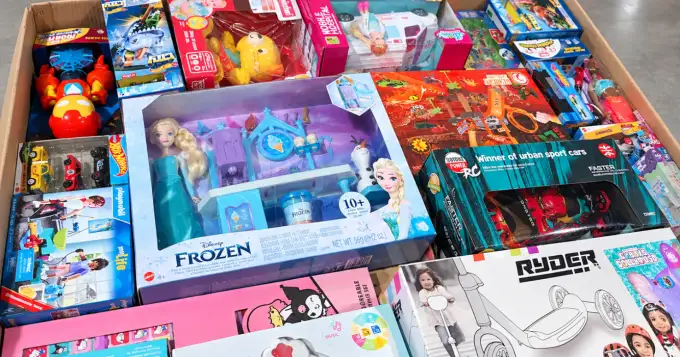
Christmas demand can make a toy range look easy to plan: order more, sell quickly, then clear what remains. In practice, the calendar is less tidy. Gift buying builds in stages, school breaks shift how families spend time, and different age groups respond to different products. A reseller needs a stock plan that balances availability with the risk of carrying seasonal lines after demand drops.
The first decision is timing. Christmas stock often needs to be ready before the busiest buying weeks, not delivered in the middle of them. That means working backwards from likely sales periods and allowing time to receive, sort, test and list goods. For mixed toy pallets, the sorting stage matters because a bulk lot may contain several categories, age ranges and price points. Knowing that mix early helps a reseller decide what should be listed immediately and what can wait.
School holidays create a different kind of opportunity. Parents may look for indoor activities, travel-friendly games, outdoor play items or small rewards during breaks. Demand can also vary by weather and by the length of the holiday. Instead of treating every break as a smaller Christmas, a reseller can compare previous sales by category and focus on items that suit the season. This makes toy pallets useful as a source of variety rather than a single bet on one product type.
Cash flow should shape the plan as much as demand. Ordering a larger volume may reduce the pressure to restock at short notice, but it also places more money into goods that have not yet sold. Storage, handling and listing time add to that exposure. A practical approach is to set a maximum amount of cash that can stay tied up in seasonal inventory and then divide purchases across several intake dates where supply arrangements allow.
Condition is another important variable. Toys may arrive as customer returns, surplus, shelf pulls or other forms of secondary stock, depending on the lot. Packaging can be especially important for gifts, even when the item itself is unused or fully functional. Resellers working with toy pallets should therefore separate gift-ready stock from items better suited to discounted listings, bundles or local sales. Clear condition descriptions can also reduce avoidable customer disappointment.
Forecasting becomes more useful when it is specific. Rather than estimating that “toys sell well in December”, a reseller can track how many units sold each week, how quickly particular price bands moved and which categories needed markdowns. The same records can show whether a school holiday created a short lift or simply shifted the timing of purchases. Even a basic spreadsheet can turn next year’s order into a more informed decision.
The plan should also leave room for surprises. A film release, a sudden spell of bad weather or a popular social trend can change interest quickly, but chasing every spike can create expensive leftovers. Small adjustments are usually easier to manage than a complete change of direction. Keeping some buying budget uncommitted gives the reseller a way to respond without cancelling the stock plan already built around proven categories.
There should also be a plan for the weeks after a peak. Some toys remain relevant all year, while strongly seasonal or gift-led lines may need a faster exit. Bundling complementary products, adjusting prices gradually or moving suitable stock to another sales channel can help. The aim is not to eliminate leftover inventory entirely, which is rarely realistic, but to avoid discovering in January that there is no route for clearing it.
A strong seasonal inventory plan therefore works in cycles. It prepares early, checks the actual mix on arrival, watches weekly sales and changes the next order when the evidence changes. When bulk toy stock is bought within that process, purchasing supports the calendar instead of controlling it.














Leave a Reply