


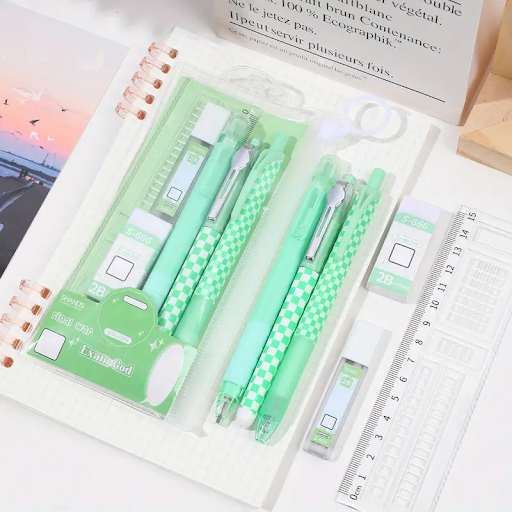
Stationary essentials support learning, planning, creativity, and everyday organization. From simple pencils and erasers to notebooks, markers, folders, and planners, each item serves a practical purpose in school, work, or home activities. A well-selected collection of stationary can make writing tasks easier, keep important notes organized, and encourage creative work. Different age groups and activities require different supplies, so understanding the purpose of each item helps create a useful stationery set without unnecessary purchases. Basic writing tools provide the foundation, while organizers and creative supplies add flexibility for assignments, projects, schedules, and personal planning.
Essential Writing Tools
Pencils remain one of the most useful stationary items for students, artists, and office users. Graphite pencils are suitable for writing, sketching, calculations, and temporary notes because marks can be removed easily with an eraser. Different pencil grades provide different levels of darkness and softness, making certain grades better suited to technical drawing or artistic work. Mechanical pencils offer consistent lines and do not require sharpening, making them practical for regular writing.
Pens are another everyday essential. Ballpoint pens are commonly used for general writing, while gel pens provide smooth ink flow and are useful for notes and headings. Fine-tip pens can help with detailed writing, labeling, and outlining. Keeping a few reliable writing instruments available can prevent interruptions during study sessions, meetings, or office tasks.
Erasers, Sharpeners, and Correction Supplies
A good pencil set is incomplete without basic correction tools. Erasers remove graphite marks and are available in different forms, including soft, vinyl, and kneaded varieties. Soft erasers are useful for ordinary writing, while kneaded erasers can be shaped for detailed artwork and shading.
Pencil sharpeners keep graphite pencils ready for accurate writing and drawing. A quality sharpener should create an even point without repeatedly breaking the pencil lead. Correction tape and correction pens can also be useful for making clean changes to written work, particularly when editing notes or completing forms.
Notebooks and Writing Pads
Notebooks provide a simple way to record information, ideas, homework, meeting notes, and personal reminders. Different formats suit different tasks. Ruled notebooks are useful for ordinary writing, while grid paper can support mathematics, diagrams, and planning. Plain pages provide greater freedom for sketches, mind maps, and creative activities.
Writing pads are convenient for temporary notes and quick lists. Spiral-bound notebooks can remain open more easily on a desk, while hardbound notebooks generally provide greater durability. Paper quality also matters, especially when using markers, fountain pens, or heavier ink.
Markers and Highlighters
Markers and highlighters add visual organization to written information. Highlighters can draw attention to important terms, dates, definitions, or instructions without covering the original text completely. Multiple colors can be assigned to different types of information, such as deadlines, key concepts, or revision topics.
Permanent and washable markers serve different purposes. Permanent markers work well on surfaces such as plastic, cardboard, and labels, while washable markers are often better for children’s creative activities. Fine-tip markers are useful for detailed writing, whereas broad-tip markers are suitable for signs and large lettering.
Folders, Files, and Organizers
Paper organization becomes increasingly important as documents, assignments, receipts, and notes accumulate. Folders help separate materials by subject, project, or purpose. Document files provide additional protection and make important papers easier to store.
Ring binders are particularly useful for information that changes regularly because individual pages can be added, removed, or rearranged. Expanding files can hold multiple categories in a single compact organizer. Labeling each folder clearly can save time when searching for specific documents.
Planners for Better Organization
Planners combine writing and organization in a single stationary item. A daily planner can provide space for appointments, tasks, reminders, and short-term goals. Weekly planners offer a broader view of upcoming activities, while monthly layouts make it easier to track deadlines and important dates.
A planner becomes more useful when entries remain simple and consistent. Important deadlines can be written first, followed by smaller tasks that support each deadline. Symbols, short notes, and color coding can make information easier to review. A paper planner can also work alongside digital calendars, providing a physical overview of priorities.
Desk Essentials for Everyday Tasks
A practical desk setup often includes several small stationary items that support regular work. Sticky notes are useful for temporary reminders, labels, and quick messages. Paper clips and binder clips keep documents together without permanently attaching pages. A stapler is helpful for organizing multiple sheets, while a ruler supports accurate lines and measurements.
Scissors, glue sticks, tape, and a pencil case can also form part of a basic stationary collection. Keeping frequently used items within easy reach helps maintain an organized workspace and reduces time spent searching for supplies.
Creative Stationary for Learning and Hobbies
Stationary is not limited to ordinary writing. Creative supplies can support drawing, coloring, journaling, craft projects, and classroom activities. Colored pencils provide controlled shading, while crayons and markers offer stronger color coverage. Sketchbooks provide dedicated space for drawings without mixing artwork with school or office notes.
Creative tools can also make learning activities more engaging. Diagrams, visual notes, mind maps, and labeled illustrations can help organize complex information. For younger learners, colorful stationary can support handwriting practice, drawing exercises, and classroom projects.
How to Build a Useful Stationary Set
A practical stationary collection should begin with frequently used essentials rather than large quantities of rarely needed items. A basic set may include:
- Graphite pencils and reliable pens
- Eraser and pencil sharpener
- Notebook or writing pad
- Highlighters and basic markers
- Folder or document organizer
- Sticky notes
- Ruler, scissors, and glue
- Planner or calendar notebook
- Pencil case or desk organizer
- Selected creative supplies
The right combination depends on the purpose. A student may need more notebooks and writing tools, while an office worker may require folders, planners, sticky notes, and document organizers. Artists and creative learners may need a wider range of pencils, markers, and sketching materials.
Tips for Maintaining Stationary Supplies
Good organization can extend the usefulness of stationary and prevent unnecessary replacement. Pens should be stored with caps secured, pencils should remain protected from moisture, and paper products should be kept in a dry place. Frequently used supplies can stay in a pencil case or desk organizer, while backup materials can be stored separately.
Regularly checking supplies also helps identify items that need replacement. Broken pencils, dried markers, empty pens, and damaged folders can be removed before an important task begins. Simple organization habits keep the workspace prepared for study, work, and creative activities.
Stationary Essentials at Bachaa Party
Bachaa Party provides value by bringing together a broad range of children’s and family-oriented products in one place, including school and stationary essentials. A convenient selection of writing tools, notebooks, coloring supplies, organizers, and other learning materials can make preparation for school and creative activities simpler. Stationary also supports everyday learning by giving children practical tools for writing, drawing, organizing, and completing projects. A balanced collection can combine basic essentials with age-appropriate creative items, helping create a useful learning environment without making the workspace unnecessarily complicated.















Leave a Reply