


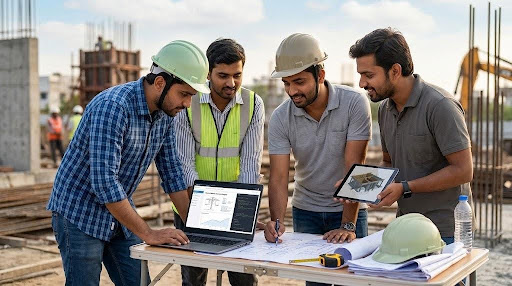
Civil engineering now extends beyond traditional design, construction supervision, and site management. Modern projects increasingly depend on digital modelling, structural analysis, sustainability, project coordination, and data-driven decisions. As industry expectations evolve, professionals need to strengthen skills beyond their academic qualifications.
Online certification courses for civil engineers offer a flexible way to develop specialized knowledge alongside existing responsibilities. From mastering engineering software to improving project management capabilities, these courses can help professionals broaden their expertise, adapt to technological changes, and stay better prepared for evolving career opportunities.
1. Structural Analysis and Design Skills
Structural analysis is one of the core areas where additional technical knowledge can strengthen a civil engineer’s professional capabilities. Certification programs can introduce learners to methods used to evaluate structural behaviour, load distribution, stability, and design requirements. Engineers can also become more familiar with digital approaches to structural modelling.
Instead of relying entirely on manual calculations, professionals can learn how software assists with analysis and helps them examine different structural conditions. This knowledge can be valuable when working on buildings, bridges, industrial structures, and other infrastructure projects where accuracy and systematic evaluation are essential.
2. Building Information Modelling Knowledge
Building Information Modelling, commonly known as BIM, has become an important part of modern construction workflows. It allows professionals from different disciplines to work around a shared digital representation of a project. An online certification can help civil engineers understand concepts such as model development, coordination, information management, and clash detection.
More importantly, BIM training can show how design information connects with construction and project management activities. Developing BIM knowledge can therefore help engineers communicate more effectively with architects, structural specialists, contractors, and other project stakeholders.
3. Proficiency in Engineering Software
Civil engineering software supports structural analysis, drafting, modelling, estimation, planning, and project coordination. Certification-based learning helps professionals develop practical software skills rather than relying solely on theoretical knowledge. Structured courses can guide learners from fundamental operations to advanced applications, making it easier to apply digital tools confidently in real engineering projects.
For example, engineers interested in structural analysis can explore a STAAD Pro online course to develop their understanding of digital structural modelling and analysis workflows. Such software-focused learning can add a practical dimension to an engineer’s existing academic knowledge.
4. Project Management Abilities
A technically strong engineer also needs to understand how projects are planned, coordinated, monitored, and completed. Project management courses can help civil engineering professionals develop skills related to scheduling, resource allocation, cost control, risk identification, documentation, and team coordination. These abilities become particularly important when engineers move into supervisory or managerial responsibilities.
Understanding how individual engineering tasks fit into a larger project can improve decision-making and communication. Online learning can make project management education more accessible to professionals who want to strengthen these capabilities without stepping away from their existing roles.
5. Quantity Estimation and Cost Awareness
Construction decisions are closely connected with materials, labour, quantities, and budgets. Civil engineers who understand estimation and cost-related processes can contribute more effectively to project planning. Certification programs may cover quantity take-offs, material estimation, rate analysis, budgeting, and cost monitoring.
Learning these concepts can help engineers understand the financial implications of design and construction decisions. This skill can also improve communication between engineering teams and commercial departments. When professionals understand both technical requirements and cost considerations, they can evaluate project options more comprehensively.
6. Sustainable Construction Practices
Sustainability has become an increasingly relevant consideration across infrastructure and construction projects. Engineers are expected to think about resource consumption, energy efficiency, waste reduction, environmental impact, and long-term performance. Specialized certification courses can introduce civil engineers to sustainable materials, green construction techniques, environmental assessment, and resource-efficient design principles.
The benefit goes beyond adding another qualification to a professional profile. Sustainability training can encourage engineers to consider how engineering decisions affect a project’s entire lifecycle, from construction through operation and maintenance.
7. Geotechnical and Site Investigation Knowledge
The ground beneath a structure can influence almost every major design and construction decision. Courses focused on geotechnical engineering can help professionals improve their understanding of soil behaviour, foundations, site investigation, bearing capacity, and ground-related risks. For civil engineers working primarily in other areas, additional training in geotechnical concepts can provide useful interdisciplinary knowledge.
It can also help professionals communicate more effectively with specialists when site conditions create design or construction challenges. Online certification makes it possible to revisit these subjects systematically and build knowledge around specific professional requirements.
8. Communication and Documentation Skills
Engineering expertise has limited value if technical information cannot be communicated clearly. Civil engineers regularly prepare reports, drawings, project documentation, specifications, presentations, and technical correspondence. Courses that strengthen professional communication can help engineers present complex information in a more organized and understandable manner.
This is especially useful when working with clients, contractors, consultants, government authorities, and multidisciplinary teams. Strong documentation skills can also support smoother project coordination because decisions, changes, calculations, and responsibilities can be recorded more clearly.
9. Data and Digital Skills
Digital transformation is influencing how construction and infrastructure projects are planned and monitored. Civil engineers can benefit from understanding basic data handling, digital project workflows, visualization, and analytical tools. Additional courses for civil engineers can therefore extend beyond conventional technical subjects.
Training in digital technologies can help professionals interpret project information, identify patterns, and support better decisions. These skills are particularly useful as construction organizations increasingly adopt connected platforms and technology-driven methods for project monitoring and management.
10. Safety and Risk Management
Construction environments involve multiple hazards, making safety knowledge an essential professional competency. Certification programs can help civil engineers understand risk identification, safety planning, compliance requirements, emergency procedures, and preventive practices. Risk management also extends beyond physical safety.
Engineers may need to consider design uncertainties, material issues, schedule disruptions, environmental conditions, and other factors that can affect project performance. Developing a structured approach to risk can help professionals identify potential problems earlier and contribute to safer, more controlled project execution.
Conclusion
Continuous learning helps civil engineers stay adaptable. Construction methods continue to evolve. Software and digital tools are also changing. Sustainability is becoming more important. Project workflows are becoming more advanced. The right certification can strengthen technical knowledge. It can also build practical skills in structural analysis, BIM, project management, estimation, safety, and digital engineering. Professionals should choose courses based on their career goals. Certificates should support meaningful skill development. Civilera can help engineers explore relevant learning opportunities. Its STAAD Pro online course can support deeper knowledge of digital structural engineering workflows.












Leave a Reply