


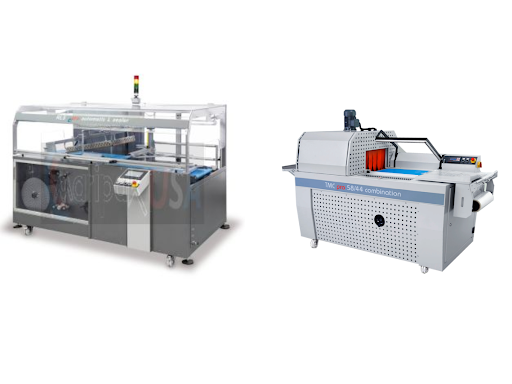
Packaging plays an important role in protecting products during handling, storage, transportation, and distribution. For many applications, the outer package must do more than simply contain an item. It may need to protect against dust and handling damage, group multiple products together, or provide a consistent appearance. Shrink packaging systems are designed to address these requirements by combining shrink film with sealing, heating, conveying, and product-handling equipment.
Modern systems can range from relatively simple setups for smaller production runs to integrated automated lines designed for continuous operation. Understanding how these systems work and what components they require can help businesses make more informed packaging decisions.
What Are Shrink Packaging Systems?
Shrink packaging systems use heat-sensitive plastic film to enclose a product or group of products. The film is first positioned and sealed around the item before controlled heat causes it to contract and conform more closely to the product.
A typical system may include an infeed conveyor, sealer, shrink film, heat tunnel, and discharge conveyor. Each component has a specific role in creating a finished package. The sealer closes the film around the product, while the heat tunnel applies controlled thermal energy to shrink the film.
The precise configuration depends on product dimensions, film type, production volume, and the desired packaging result.
How Does Shrink Packaging Work?
The basic process involves several stages.
Product Infeed
Products enter the packaging line through manual loading or an automated infeed system. Consistent positioning can be important because product alignment affects sealing and the final appearance of the package.
Film Wrapping and Sealing
Shrink film is placed around the product and sealed. Different sealing technologies can be used depending on the application, including L-sealers and side sealers. An L-sealer creates an L-shaped sealing cycle, while side-sealing systems can support continuous product flow and variable product lengths.
Heat Shrinking
After sealing, the package moves through a heat tunnel. Controlled airflow and temperature cause the film to contract around the product.
Discharge
The finished package exits the tunnel and can continue to another stage of production, inspection, labeling, storage, or distribution.
The entire process can be manual, semi-automatic, or fully automatic depending on production requirements.
What Equipment Is Included in a Shrink Packaging System?
The components used in shrink packaging systems vary according to the application, but several pieces of equipment are common.
L-Sealers
L-sealers are frequently used in shrink-wrapping applications where products need to be enclosed in film before entering a heat tunnel. They can be configured for different production requirements.
Side Sealers
Side sealers can be useful for continuous packaging operations and products with varying lengths. They create a longitudinal seal while the product moves through the system.
Heat Shrink Tunnels
Heat tunnels provide the thermal stage of the process. The tunnel must be matched to the product size, film characteristics, required production rate, and sealing equipment.
Conveyors
Conveyors transport products between stages. They can help create a continuous workflow and reduce manual product movement.
Feeders and Peripheral Equipment
Additional equipment may be used to orient, group, align, or otherwise prepare products before wrapping. These components can be particularly useful when packaging lines are being automated.
What Types of Shrink Film Are Used?
Film selection is an important part of designing shrink packaging systems. Common shrink-film materials include polyolefin, PVC, and polyethylene, with each offering different characteristics.
Polyolefin film is often selected for applications where clarity, puncture resistance, and versatility are important. PVC can provide clarity and a tight finished appearance, while polyethylene is generally associated with heavier-duty applications such as multipacks and larger bundles.
Film thickness also matters. Thicker film may provide greater durability for demanding applications, while thinner films may be appropriate for lighter products. However, the correct choice depends on more than product weight. Sealer compatibility, product dimensions, shrink characteristics, and machine settings all need to be considered.
How Do You Choose the Right Shrink Packaging System?
Choosing shrink packaging systems should begin with the product rather than the machine.
Product Size and Shape
Measure product dimensions carefully, including variations in product size. Irregular products may require different sealing or film-handling arrangements than standardized boxes.
Production Volume
A business packaging a limited number of products each day may have different equipment requirements from a high-volume production facility. Manual, semi-automatic, and fully automatic systems can provide different levels of throughput and labor involvement.
Film Type
The selected film must be compatible with the sealer and heat tunnel. Temperature, shrink rate, thickness, and sealing characteristics can all influence the final result.
Available Space
Equipment dimensions and conveyor arrangements should be considered when designing the packaging area. A technically suitable machine may not be practical if the facility cannot accommodate its footprint or product flow.
Future Requirements
Businesses should also consider whether production volumes or product ranges are likely to change. A system that can accommodate future requirements may reduce the need for premature replacement.
Why Is Heat Tunnel Design Important?
The heat tunnel is responsible for transforming loosely fitted film into a tighter package. Temperature, airflow, conveyor speed, and dwell time all influence the result.
If the temperature is too low or exposure time is insufficient, the film may remain loose or develop undesirable wrinkles. Excessive heat can potentially damage packaging materials or affect the product, depending on the application.
Modern tunnels can provide adjustable controls for temperature, airflow, and conveyor speed. Our Mini Series T-60, for example, uses controlled heat adjustment, conveyor-speed control, airflow control, and a top-circulated airflow system.
Different tunnel configurations may also be appropriate for different production requirements. Our Diamond Series includes single- and double-chamber options designed for different throughput and product applications.
What Are the Benefits of Automation?
Automation can help reduce repetitive manual handling and create a more consistent product flow. In a fully integrated packaging line, products can move from infeed through sealing and shrinking without requiring an operator to transfer each package manually.
However, automation should be evaluated as a complete process. A high-speed sealer will not necessarily improve overall throughput if the infeed, heat tunnel, or discharge conveyor cannot keep pace.
For that reason, businesses should consider the entire line when evaluating shrink packaging systems. Machine speed, film handling, conveyor movement, thermal processing, and product flow need to work together.
How Can Maintenance Affect Packaging Performance?
Regular maintenance is important for reliable operation. Conveyor belts, heating components, fans, sensors, sealing elements, and electrical systems can all require inspection or servicing.
Heat tunnels in particular should be kept clean and inspected according to manufacturer recommendations. Dust or debris can affect airflow, while worn components can contribute to inconsistent operation.
What Safety Considerations Matter?
Shrink packaging equipment combines moving machinery with heated surfaces, making appropriate operator training important. Workers should understand normal operating procedures, emergency controls, safe loading practices, and shutdown requirements.
Heat tunnels should be operated according to their specified safety procedures, and maintenance should only be performed using appropriate equipment-isolation practices.
Safety features can vary between machines. For example, our tunnel systems incorporate protective and control features designed around operator safety and controlled operation.
Conclusion
Shrink packaging systems combine film, sealing equipment, heat tunnels, conveyors, and other components to create a controlled packaging process. Their applications can range from individual retail products to multipacks, industrial bundles, and other packaging formats. At Maripak USA, we approach shrink packaging as an integrated process rather than a single-machine decision. By combining sealing, heat-shrink technology, conveyors, and supporting equipment, we can help create packaging workflows suited to different production requirements. Ultimately, the most effective system is one that balances packaging quality, product protection, operational consistency, safety, and the practical demands of the production environment.








Leave a Reply